Commercial Waste Disposal in London
If you run a business in the capital, you already know that waste builds up quickly. Whether you manage a busy office, a restaurant, a retail unit, a hotel, a clinic, a workshop, or a multi-tenant property, reliable Commercial Waste Disposal in London is not just a convenience — it is part of keeping your premises safe, presentable, and compliant. In a city where space is tight, access can be awkward, and schedules are often packed, choosing the right local waste partner makes a noticeable difference.
From the City and Westminster to Hackney, Camden, Lambeth, Southwark, Kensington, Hammersmith, Tower Hamlets, Islington, Ealing, Wandsworth, Brent, Greenwich, and beyond, businesses need a service that can handle everyday waste as well as heavier clear-outs and one-off disposals. A good commercial collection service should fit around your operating hours, work efficiently in busy streets, and deal with the kind of waste your business actually produces.
This page is designed for real London businesses looking for a practical solution. If you need scheduled collections, occasional uplift services, or help with a business premises clear-out, the sections below explain what is included, how the service works, what can affect pricing, and how to prepare for a collection. Contact us today or request a free quote when you are ready to arrange a collection that suits your site.
Why Commercial Waste Disposal Matters for London Businesses

Commercial waste is different from household rubbish. It is generated in larger volumes, often contains mixed materials, and is usually produced on a tight schedule. In London, that challenge is amplified by limited loading space, controlled parking zones, narrow side streets, shared access routes, and buildings where bins need to be moved through basements, courtyards, lifts, or service entrances.
For many local businesses, the right waste arrangement helps keep operations running smoothly. A restaurant in Soho may need early-morning uplift so deliveries are not interrupted. An office in Canary Wharf might need regular bin collection without disruption to staff or visitors. A shop in Camden could need fast clearance after refurbishment or stock changes. The best service adapts to those realities rather than forcing your business to fit an inflexible system.
There is also a compliance angle. Businesses have responsibilities when it comes to storing, transferring, and disposing of waste correctly. Using a professional disposal service helps reduce the risk of cluttered back areas, blocked fire exits, unpleasant odours, pest issues, and avoidable interruptions. It also means waste is handled in a way that suits the type of material being removed, whether that is general commercial rubbish, packaging, office furniture, or mixed non-hazardous waste.
Types of Commercial Waste We Commonly Handle

Every business produces a slightly different mix of waste, and that is why flexible collection matters. Commercial waste disposal in London often includes a combination of recurring rubbish and occasional bulky items that need extra attention. A service tailored to your premises can save time and make day-to-day operations easier.
Common materials include paper and card, packaging, old stock, broken fixtures, furniture, shelving, small appliances, shop fitting waste, mixed office waste, and items left over after a move, refit, or seasonal changeover. Many London businesses also need support with the removal of redundant equipment, archives, display materials, and accumulated clutter from stock rooms or back offices.
In some settings, waste builds up in ways that are not obvious until it becomes a problem. A hotel may have constant linen packaging and housekeeping waste. A café may need regular emptying of front-of-house and kitchen areas. A clinic or private practice may generate non-clinical general waste, cardboard, and packaging that needs careful handling. The aim is to keep the site tidy and functional while removing waste quickly and responsibly.
Who Our Service Is For

London is full of businesses with very different waste patterns. A good commercial collection service should work for small independent operators as well as larger organisations. It should also suit buildings with shared access, concierge arrangements, or limited outside space.
Typical customers include offices, restaurants, cafés, bars, retail stores, salons, gyms, schools, landlords, estate managers, building contractors, workshops, studios, and hospitality venues. Commercial waste disposal is also useful for business owners who are moving premises, closing a branch, fitting out a unit, or clearing a storage area that has become overfilled over time.
If your property is in a busy part of London, your waste service should understand the practical issues that come with that location. That includes access restrictions in central areas, permit or loading bay considerations, shared entrances in converted buildings, lift access in office blocks, and the need to keep public-facing areas presentable at all times. A local team that regularly works across the city is often better placed to manage those conditions efficiently.
What Is Included in a Commercial Waste Collection
When customers enquire about business waste removal, they often want to know exactly what happens on the day. A well-run service should be clear, straightforward, and adapted to the site. The focus is on making the process easy for the customer while ensuring the waste is taken away safely and efficiently.
Typical inclusions may involve loading agreed waste from a designated area, removing bulky items from offices or storage spaces, separating waste where needed, and clearing up after the collection so the area is left tidy. Depending on the arrangement, service can be provided as a one-off clearance or as a recurring collection plan that suits your workload and operating hours.
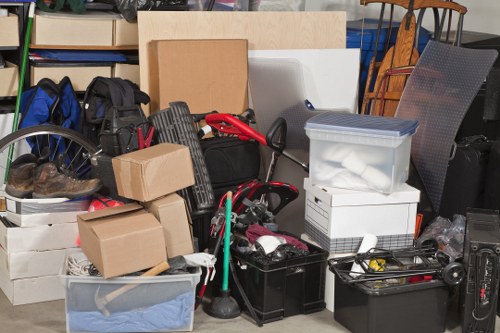
In many cases, customers also value a service that can handle a mixed load. For example, a retail refurbishment might produce old fittings, cardboard, broken shelving, packaging, and general rubbish all in one project. Rather than organising multiple removal methods, businesses often prefer one local collection that can deal with the practical reality of the site. Book your service now if you need a straightforward solution for an upcoming clear-out.
How the Service Works
Commercial waste disposal in London should feel simple from the first enquiry to the final collection. Most businesses want a process that is easy to arrange, easy to understand, and reliable enough to fit into a busy working week.
Usually, the process begins with a discussion about the type of waste, the volume involved, the collection location, and any access details. This helps determine the most suitable approach, whether you need a regular service or a one-off visit. After that, the collection can be scheduled around your opening hours, deliveries, or quieter periods so the removal causes minimal disruption.
On collection day, the team arrives with the right vehicle and equipment for the job. For premises in central London or dense neighbourhoods, that may mean planning around loading restrictions, narrow roads, or building access rules. Once the waste is loaded and removed, the job is completed with attention to tidiness and efficiency. If your site has specific instructions — such as using a rear entrance, contacting reception on arrival, or avoiding certain times — those details should be built into the plan.
Why Local Knowledge Matters in London
London is not a one-size-fits-all city. A collection in Shoreditch can look very different from one in Richmond, Stratford, Wimbledon, Finsbury Park, or Hammersmith. The local geography, traffic patterns, parking controls, and building layouts all affect how waste disposal is handled. That is why a local company can be a strong choice.
Local knowledge helps with practical problem-solving. For instance, a business in a busy high street location may need a service that understands how to work around limited stopping time. A basement office in Holborn may need waste moved through a building with shared access. A restaurant in South London may need early or late collection to avoid service hours. A local team is more likely to be familiar with those everyday realities and plan accordingly.
It also matters for repeat service. Businesses often need consistent collections that fit their pace and seasonal demand. London retail stores, hospitality venues, and office buildings can all experience changes in waste output throughout the year. Having a dependable local partner makes it easier to adapt without delaying operations or letting waste pile up. Request a free quote if you want a service that is practical for your area and your building type.
Areas Covered Across London
A good commercial waste disposal service should be able to support businesses across a broad part of the capital, from central districts to outer boroughs. The most useful providers are those that regularly work in a range of commercial environments and can adapt to different property types.
Areas commonly served include central London locations such as Westminster, the City, Holborn, Covent Garden, Soho, Mayfair, and South Bank; north London areas such as Islington, Camden, Kentish Town, Finsbury Park, and Tottenham; east London locations including Hackney, Shoreditch, Bethnal Green, Whitechapel, Stratford, and Canary Wharf; south London areas such as Lambeth, Southwark, Brixton, Clapham, Greenwich, and Wimbledon; and west London districts including Kensington, Chelsea, Hammersmith, Fulham, Ealing, and Acton.
Commercial customers in outer areas such as Croydon, Enfield, Harrow, Brent, Waltham Forest, Merton, Lewisham, and Hounslow also need a service that can work efficiently in mixed-use streets, industrial estates, office parks, and high-footfall retail locations. The main benefit of a city-wide service is consistency: wherever your business is based, you should be able to arrange a collection that fits your site and your timetable.
What Affects the Cost of Commercial Waste Disposal?
Pricing for business waste disposal depends on several practical factors rather than a single flat approach. This is important for customers to understand, because the right quote should reflect the actual work involved.
Common factors include the volume of waste, the type of material being removed, whether it is a one-off clearance or an ongoing collection, how easy it is to access the waste, whether the property has stairs or limited lift access, and whether special loading arrangements are needed. Locations with restricted parking or complicated access can also influence the time and planning required.
Other considerations may include the need for same-day or urgent collection, the quantity of bulky items, and whether the site requires a specific booking window. Businesses often find it useful to describe the waste clearly and provide photos if available, because that helps the service provider give a more accurate estimate. If you are comparing options, look for a company that explains its pricing factors clearly and avoids confusion around what is and is not included.
Preparation Checklist Before Your Collection
A little preparation can make a commercial waste collection smoother and quicker, especially in busy London settings. The goal is to reduce delays and make sure the team can work safely and efficiently on arrival.
Useful steps include gathering waste in one accessible area, separating items if you have been asked to do so, checking that building access is available, and making sure any relevant gate codes, loading bay instructions, or reception procedures are ready. If you are in a shared building, it can also help to notify building management or concierge staff in advance so they know to expect the collection.
Here is a simple checklist many customers find helpful:
- Confirm the collection time and location within the building
- Make sure waste is clearly identified and ready to move
- Keep loading routes free from obstacles where possible
- Reserve lift access or goods-lift use if needed
- Tell staff not to add extra items after the plan has been agreed
- Remove any personal or confidential materials before collection
If your site is particularly tight on space, it may be helpful to prepare waste in stages rather than leaving everything until the last minute. That can make a big difference in offices, restaurants, salons, and retail premises where back-of-house areas are already under pressure.
Benefits of Choosing a Professional Disposal Service
There are several reasons why businesses prefer a professional approach to waste disposal rather than trying to manage everything internally. The most obvious benefit is convenience: it saves time for staff who should be focused on running the business rather than moving rubbish around.
Another major advantage is presentation. Customers, clients, and staff all notice when waste is allowed to accumulate. Regular removal helps maintain a cleaner environment, which is especially important for front-of-house businesses such as cafés, showrooms, hospitality venues, and customer service offices. It also helps preserve usable storage space, which is always valuable in London premises.
Commercial waste disposal in London is also about predictability. When collections are planned properly, you reduce the chance of last-minute problems, overflowing bins, or unsightly piles building up near entrances and service areas. That can improve workplace morale, make health and safety management easier, and allow your business to focus on serving customers rather than dealing with clutter.
Commercial Waste Disposal for Different Property Types
London contains a wide mix of buildings, and each comes with different waste challenges. A service that works well in one setting may need to be adjusted for another. That is why flexibility matters so much.
Offices often need collections for paper, packaging, old IT equipment, chairs, desks, and general mixed rubbish from day-to-day operations or relocations. Retail units may produce cardboard, hangers, display material, old stock, and packaging from deliveries. Hospitality venues can generate high volumes of packaging, kitchen waste, and bulky items from maintenance or refurbishment.
For managed buildings and mixed-use developments, access can be especially important. Waste may need to be collected from a service yard, basement store, bin room, or rear entrance. In older converted buildings, staircases and narrow corridors can make manual movement necessary. A local team that understands these property types can work more smoothly and reduce disruption for tenants, customers, and neighbouring businesses.
One-Off Clearances and Regular Collections
Not every business needs the same arrangement. Some only need a one-off clearance after a move, refurbishment, or stock change. Others want regular collections to keep waste under control week after week. Both options are common, and both can be useful depending on how your business operates.
One-off clearances are often chosen when there is a sudden build-up of bulky waste, old furniture, mixed rubbish from a refit, or leftover material after a project. Regular collections are better for businesses with ongoing waste output, such as offices, cafés, restaurants, and shops that need steady support to maintain a clean and practical workspace.
If you are unsure which approach suits you, it is usually worth discussing your current waste levels and how they change during busy periods. Seasonal peaks, special events, refurbishments, and staffing changes can all influence how often waste needs to be removed. A sensible plan should feel manageable rather than excessive. Contact us today to talk through the option that best fits your premises.
Health, Safety, and Site Tidiness
Waste left in the wrong place can quickly become more than an inconvenience. It may block walkways, create trip hazards, attract pests, or make it difficult for staff and visitors to move safely through the property. This is especially relevant in busy London workplaces where space is already limited.
A professional collection service helps keep back-of-house areas under control. That means fewer piles in corridors, less clutter near exits, and reduced pressure on bins and storage rooms. For customer-facing businesses, it also helps maintain a more polished look. A tidy entrance, yard, or service area creates a better impression than overflowing containers or stacked rubbish bags.
From a practical point of view, tidiness also supports smoother operations. Staff can find what they need more easily, cleaners can work more effectively, and managers can keep an eye on the actual use of space. In many premises, waste management is one of those jobs that only becomes visible when it is handled badly — which is another reason to keep it organised from the start.
Frequently Asked Questions
Below are some of the most common questions asked by London businesses looking for commercial waste disposal.
How do I know what type of collection I need?
That depends on the waste you produce, how often it builds up, and how much space you have available. A small office may only need occasional uplift, while a busy hospitality venue may need regular scheduled collections. If you are unsure, it helps to describe the waste and the building access so the right option can be recommended.
Can waste be collected from inside the building?
Yes, in many cases it can. That is often useful in London buildings where bins are kept in basements, plant rooms, back offices, or service areas. Access details should be explained in advance so the collection can be planned safely.
Do you handle bulky items and office furniture?
Bulky items are a common part of commercial clearances. Desks, chairs, shelving, cabinets, and similar items can usually be included, provided the collection is arranged with the right detail beforehand. It is always best to mention larger items when requesting a quote.
What if my premises has limited parking or loading access?
That is very common across London, particularly in central and inner borough locations. Loading restrictions, narrow roads, and shared access points can usually be managed with careful planning. The important thing is to explain the access situation clearly before booking.
Can you help with a same-day or urgent clearance?
Urgent collections are sometimes possible depending on availability and the location of your site. If you need a fast response, it is best to get in touch as early as possible with a clear description of the waste and the access requirements.
Why Businesses Choose a Local London Team
Choosing a local company for commercial waste disposal is often about speed, convenience, and understanding the city. Businesses in London usually need a provider that can work around traffic, tight streets, and limited time windows without causing unnecessary disruption.
A local team is also better placed to understand how different boroughs operate in practice. A loading arrangement in one part of the city may not be suitable in another. Likewise, the waste needs of a busy West End restaurant are very different from those of a warehouse-style unit in an industrial estate or a small consultancy office in a converted townhouse.
When you choose a nearby service provider, you are more likely to get a collection that feels practical and responsive. That is especially valuable when waste needs to be removed quickly, when your staff are already busy, or when you are dealing with a project that has a fixed deadline. Book your service now if you want a waste solution that works with the realities of London business life.
What to Expect When You Enquire
When you ask for a quote, the more detail you can share, the better. Try to explain what kind of business you run, what waste you need removed, how much there is, where it is stored, and whether there are any access restrictions. Photos can also help if you have them available.
A good conversation should leave you clearer about the collection process, the likely timing, and any preparation needed on your side. If you have a recurring waste issue, you may also want to discuss how often collections should happen to avoid build-up. Businesses often appreciate clear, practical advice rather than a one-size-fits-all approach.
Before you book, it can help to ask about the collection method, the types of waste accepted, and what happens if the load is bigger or smaller than expected. Being specific from the beginning makes the service smoother for everyone involved and helps avoid surprises on the day.
Final Thoughts for London Businesses
Good waste management is part of good business management. For companies across London, the challenge is not just removing rubbish — it is doing so in a way that fits the site, the schedule, and the reality of operating in a busy city. That is why a tailored commercial waste collection service can be so valuable.
Whether you need a one-off clearance, regular business waste removal, or help with a difficult building access situation, the right local team should make the process simpler rather than adding more work to your day. From central offices and retail units to hospitality venues, managed buildings, and independent local businesses, the aim is always the same: keep your premises clear, functional, and ready for business.
If you are arranging waste disposal for your premises, contact us today to discuss your needs, request a free quote, and find out how a professional local service can support your business in London.