Insurance and Safety for Junk Removal Services
 When choosing a junk removal service, safety is not an afterthought; it is part of the work from the very first item lifted. A professional junk removal company should protect clients, staff, and property through clear procedures, reliable equipment, and a strong safety culture. From awkward furniture and broken appliances to construction debris and sharp objects, every job presents different hazards. That is why insured junk removal and careful planning matter on every collection.
One of the most important safeguards is public liability insurance. This cover helps protect against accidental damage to a customer’s property or injury to a third party during a collection. In practical terms, if a hallway wall is scratched, a floor is marked, or an unexpected incident occurs while moving heavy waste, the business is prepared. For a junk removal specialist, insurance is a sign of professionalism and responsibility, showing that the team takes both the task and its risks seriously.
 Alongside insurance, staff training is central to safe rubbish removal. Team members should be trained to identify hazards such as sharp metal, unstable piles, asbestos suspicion, broken glass, heavy lifting risks, and confined access points. Training also supports correct manual handling, safe loading techniques, and communication between crew members. When a debris removal service invests in training, it reduces mistakes and helps workers complete jobs efficiently without compromising safety.
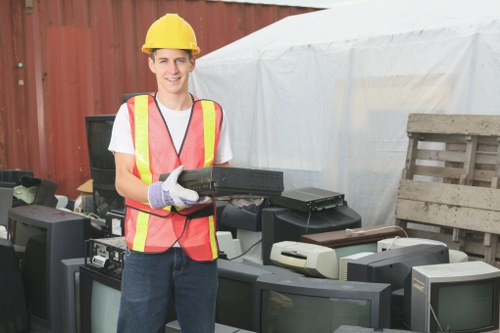
Personal protective equipment, or PPE, is another essential layer of protection. Depending on the job, workers may wear gloves, safety boots, high-visibility clothing, eye protection, hard hats, and dust masks or respirators. PPE does not replace proper planning, but it helps reduce exposure when hazards cannot be fully removed. A reliable waste removal team uses PPE consistently, not only on large commercial projects but also on smaller domestic clearances where risks can still be significant.
The risk assessment process begins before the job starts. A trained team reviews the site, checks access routes, identifies heavy or hazardous items, and looks for conditions that could affect safe removal. This may include slippery surfaces, poor lighting, narrow staircases, or limited parking. The assessment is then used to decide how many staff are needed, what tools should be brought, and whether additional controls are required. In a well-run junk hauling service, risk assessment is a standard part of every appointment.
 A thorough assessment also considers the type of waste being removed. For example, a furniture removal service may need extra care when dismantling wardrobes or carrying sofas down stairs, while an appliance collection may require attention to sharp edges, leaking fluids, or residual electrical connections. If a load includes unknown materials, the team should pause and investigate rather than proceed unsafely. This measured approach helps protect workers and prevents avoidable damage to the property being cleared.
Safe operations also depend on good communication. Before lifting begins, team members should agree on the plan, confirm the path through the property, and identify where items will be placed in the vehicle. Clear instructions reduce confusion and lower the chance of trips, strains, or collisions. A professional house clearance service understands that efficiency and caution must work together; rushing a job can create more problems than it solves.
Insurance and safety standards are especially important when waste is removed from businesses, rental properties, or sites with heavier materials. A commercial junk removal job may involve bulk waste, renovation debris, or equipment that needs extra handling care. In these cases, the company’s procedures should be adapted to the task, with suitable loading methods and equipment such as trolleys, straps, and protective barriers. Good planning helps keep the site orderly while limiting disruption to nearby people and property.
 Another benefit of a strong safety system is consistency. Clients can expect the same high standard whether the crew is clearing a single item or an entire property. This is where a responsible junk disposal approach stands out: each step, from arrival to final sweep-up, is guided by competence, preparation, and care. By combining public liability insurance, trained staff, and suitable PPE, the service delivers peace of mind as well as practical results.
 Ultimately, safety is part of the value of any junk removal service. Customers want their unwanted items removed quickly, but they also want the process handled without risk. A company that invests in public liability insurance, ongoing staff training, protective equipment, and a structured risk assessment process is better equipped to deliver reliable results. For homeowners and businesses alike, choosing a safe rubbish removal provider means choosing a team that respects people, property, and the job itself.