Recycling and Sustainability at Our Junk Removal Services
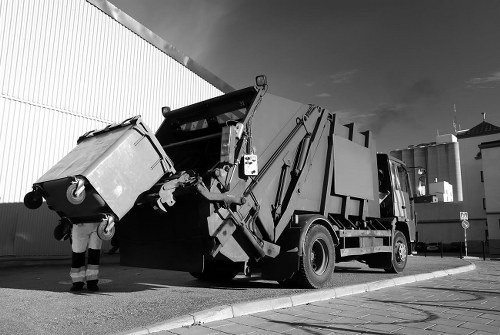 Our junk removal services are built around a simple idea: useful materials should be recovered, reused, and recycled whenever possible. We handle domestic and commercial clearances with an emphasis on reducing landfill use, improving sorting efficiency, and supporting local circular-economy efforts. By planning each collection carefully, our junk removal service helps customers dispose of unwanted items in a way that is cleaner, greener, and more responsible.
We work toward a recycling percentage target of at least 90% across suitable loads, with continuous checks to improve performance year on year. That means every clearance is assessed for recoverable metals, wood, cardboard, hard plastics, WEEE items, and reusable furniture. In many cases, a single junk removal visit can redirect a large portion of waste away from landfill through sorting, segregation, and transfer to the right processing route.
 Our approach is especially effective in urban areas where boroughs often have different rules for waste separation. A property in one borough may require mattresses, green waste, and electricals to be handled differently from a nearby district, so our junk removal company pays close attention to local recycling expectations. We also support borough-specific material streams, including separate collection for cardboard, textiles, and scrap metal where local infrastructure allows.
To make recycling of junk removal as efficient as possible, we use local transfer stations strategically. These facilities help us split mixed loads quickly and direct materials to the most appropriate recovery site. Rather than moving everything to a single destination, we rely on nearby transfer stations to reduce travel distance, streamline waste sorting, and improve the chances that recyclable items are captured before they are processed further.
These local transfer stations are particularly important for bulky clearances, office strip-outs, and house moves where mixed waste is common. Wood from shelving, clean metal from wardrobes, and cardboard from packaging can be separated at source or at the station. By working with established local facilities, our recycling-focused junk removal services can keep more material in productive use while cutting unnecessary handling.
 We also maintain partnerships with charities so that reusable items can be passed on before they are treated as waste. Furniture in good condition, small appliances that still work, books, kitchenware, and household accessories may be directed to charitable reuse channels. This is one of the most practical ways a junk removal service can support the community while lowering the environmental impact of a clearance.
Charity partnerships are especially valuable during probate clearances, office relocations, and end-of-tenancy projects, where many items are no longer needed but remain usable. Our team looks for donation opportunities that match the items collected, helping extend the life of goods and reducing the demand for new products. In sustainability terms, reuse is often the best form of recycling, because it preserves the highest possible value of the item.
We also invest in low-carbon vans to reduce emissions across our collection routes. Modern fuel-efficient vehicles, cleaner engines, and better route planning help lower the footprint of each job. When paired with optimized scheduling, these vans allow our junk removal services to complete multiple collections with fewer miles driven and less idle time. This matters in busy boroughs where traffic congestion can otherwise increase emissions significantly.
Our fleet planning also supports local recycling performance by shortening journeys to transfer stations and reuse partners. In practical terms, that means less fuel consumed per tonne of material handled and more consistent service across the area. We see low-carbon transport as a core part of sustainable junk removal, not just an added extra.
Material recovery is not limited to obvious recyclables. We separate metals for smelting, cardboard for fibre recovery, and clean wood for reprocessing wherever possible. Electrical items are treated with care so components, cables, and casings can be diverted into suitable treatment streams. In some boroughs, mixed dry recycling rules can vary, so our teams stay alert to what can be separated locally and what should be sent to specialized recovery sites.
We also pay attention to the specific needs of different neighborhoods and property types. Flats, shops, offices, and construction clearances can all create different waste profiles. A careful junk removal company should recognize that one collection may contain reusable office chairs, another may contain plasterboard, and another may produce large volumes of clean packaging. Adapting the sorting process helps us maintain high recycling rates without compromising safety or efficiency.
 In many cases, a sustainability-led clearance begins before the van even arrives. We encourage clear separation of obvious recyclables where feasible, and our crews reinforce that by sorting items into clear streams during the job. This approach improves the overall recycling percentage target and supports local borough systems that rely on clean, well-separated material streams.
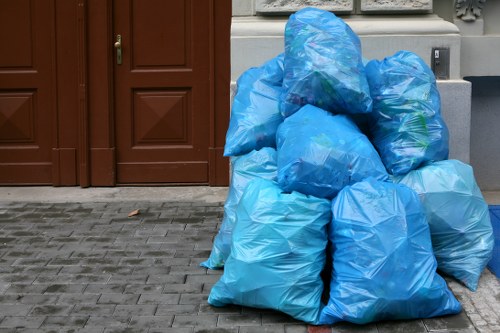 Our recycling and sustainability work is designed to make junk removal more circular, more local, and less wasteful. By combining high recycling targets, local transfer stations, charity partnerships, and low-carbon vans, we create a service that handles unwanted items responsibly from collection to final destination. The result is a more sustainable way to clear space while helping communities, supporting reuse, and reducing pressure on landfill.
As sustainability expectations continue to grow, we keep improving how our junk removal services operate across the area. From borough-level waste separation awareness to practical sorting, recycling, and reuse, every clearance offers an opportunity to do better. Our focus remains on turning disposal into recovery whenever possible, with care for the local environment at every step.