Health and Safety Policy for Junk Removal Services
 Our junk removal services are committed to protecting the health and safety of employees, customers, visitors, and the public during every stage of collection, loading, transport, and disposal. This policy sets out our general principles for safe working practices, risk control, and responsible behavior on every job. It applies to all team members, subcontractors, and anyone acting on behalf of the company.
The purpose of this health and safety policy is to prevent injury, reduce exposure to hazards, and ensure that waste removal work is carried out in a controlled and professional manner. Junk removal often involves lifting heavy objects, handling sharp materials, entering confined spaces, and moving through private or commercial premises. Because of this, safety is treated as a core part of service delivery, not an optional extra.
We will take reasonable and practical steps to identify hazards before work begins and to manage them throughout the task. All work must be planned so that risks are reduced as far as reasonably possible, with priority given to safe access, safe lifting, correct equipment, and clear communication. Every employee is expected to act responsibly and report unsafe conditions immediately.
Our junk removal safety policy covers common risks including manual handling injuries, cuts from broken glass or metal, slips and trips, dust exposure, unstable stacks of waste, and contact with unknown substances. Workers must not begin a job until they have assessed the site, confirmed the items to be removed, and identified any special hazards. If a task appears unsafe, it must be paused until controls are in place.
All staff must receive appropriate training in safe lifting techniques, hazard awareness, use of personal protective equipment, and emergency procedures. Training must be refreshed when needed, especially when procedures change or new equipment is introduced. Supervisors are responsible for making sure workers understand the task, have suitable tools, and are physically able to carry out the work safely.
Where possible, teams should use mechanical aids, dollies, straps, bins, and loading ramps to reduce strain and improve control. Heavy or awkward items should be handled by more than one person when necessary. Never attempt to lift loads that are too heavy, too large, or too unstable for safe handling. Workers should keep pathways clear and maintain good footing at all times.
 Personal protective equipment is required according to the task and the risk involved. This may include gloves, safety footwear, eye protection, high-visibility clothing, dust masks, and protective clothing. PPE must be worn correctly, kept in good condition, and replaced when worn or damaged. However, PPE is only one part of protection and does not replace careful planning or safe work methods.
Vehicles and loading areas must be maintained in a safe condition. Before use, drivers should check that vehicles are roadworthy, that tailgates and securing systems work properly, and that loads can be transported without shifting. Items must be arranged and secured to avoid falling or creating an imbalance. The loading process should be supervised to prevent overfilling and unsafe stacking.
Hazardous waste, electronic waste, batteries, chemicals, needles, asbestos-containing materials, and unknown containers must be treated with special caution. Such materials must not be handled casually or mixed with general junk. Where hazardous items are discovered, work should stop and the appropriate procedure must be followed. Staff must not guess the contents of unknown substances or attempt unsafe removal.
 Good housekeeping is essential in all junk removal operations. Work areas should be kept tidy to prevent tripping and to make movement safer for workers and occupants. Sharp debris should be collected promptly, and spills should be contained and reported. At the end of each job, the site must be left in a condition that is safe, clean, and free from obvious hazards caused by the work.
Communication is also a major part of safe practice. Before starting, workers should confirm the plan, roles, and any access limitations. During the job, team members should give clear instructions and stop the task if conditions change. Customers and property occupants should be kept away from active lifting, loading, or vehicle movement areas unless their presence is necessary and controlled.
Supervisors must monitor work to ensure this policy is being followed. They should encourage open reporting of hazards, near misses, and injuries without blame. Any accident, no matter how minor it appears, must be reported quickly so it can be reviewed and preventive action taken. Lessons learned from incidents should be used to improve future safety performance.
We also recognize the importance of worker wellbeing. Junk removal can be physically demanding, so fatigue, dehydration, poor weather, and time pressure must be managed carefully. Breaks should be provided when needed, and workers should not be expected to continue if they are unwell or unable to work safely. Safe performance always takes priority over speed.
Emergency preparedness is part of our overall safety approach. First aid kits should be available, emergency contacts should be known, and workers should understand what to do in the event of injury, fire, exposure to harmful materials, or vehicle incidents. If an emergency occurs, the immediate priority is to protect life, secure the area, and request assistance through the correct channels.
Management is responsible for reviewing this policy regularly and updating it when needed to reflect changes in operations, equipment, or risk profile. The policy will be communicated to all relevant personnel and supported by practical procedures, supervision, and training. Everyone involved in junk hauling services shares responsibility for working safely, protecting others, and maintaining professional standards.
 Failure to follow this policy may result in disciplinary action, because unsafe behavior can place people, property, and operations at risk. We expect every worker to cooperate with safety rules, use equipment properly, and immediately report hazards that cannot be controlled on site. A safe workplace depends on vigilance, respect, and consistent application of procedure.
In summary, our commitment to junk removal safety means that no job is considered complete unless it has been carried out responsibly, with due care for health, safety, and environmental responsibility. Through planning, training, supervision, and the use of appropriate controls, we aim to deliver a service that protects people while maintaining efficiency and professionalism.
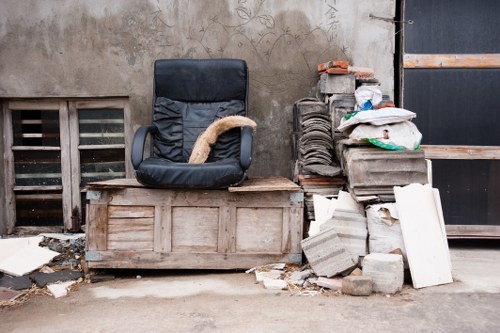 This policy supports a culture of prevention and continuous improvement across all waste removal operations. Everyone must contribute to a safe working environment by staying alert, following instructions, and treating hazards seriously. Safety is a shared duty, and it guides how every task is approached from start to finish.